

GenerMotor Unveils Rack-Adjacent HVDC Technology to Secure U.S. AI Power Sovereignty
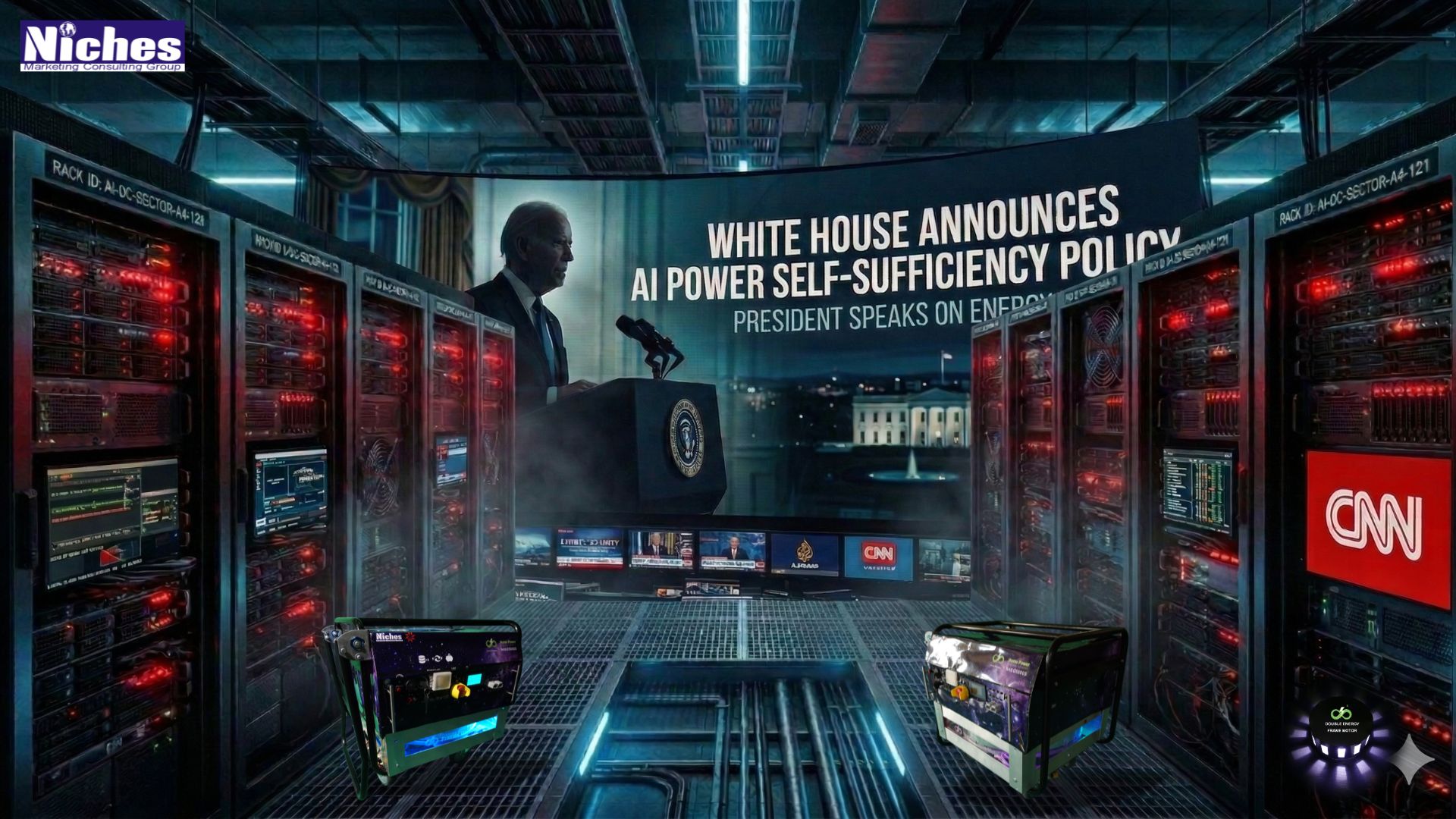
White House AI Power Self-Sufficiency Policy drives operators toward energy sovereignty. GenerMotor's modular HVDC units deliver rack-adjacent, single-conversion DC power on-site.
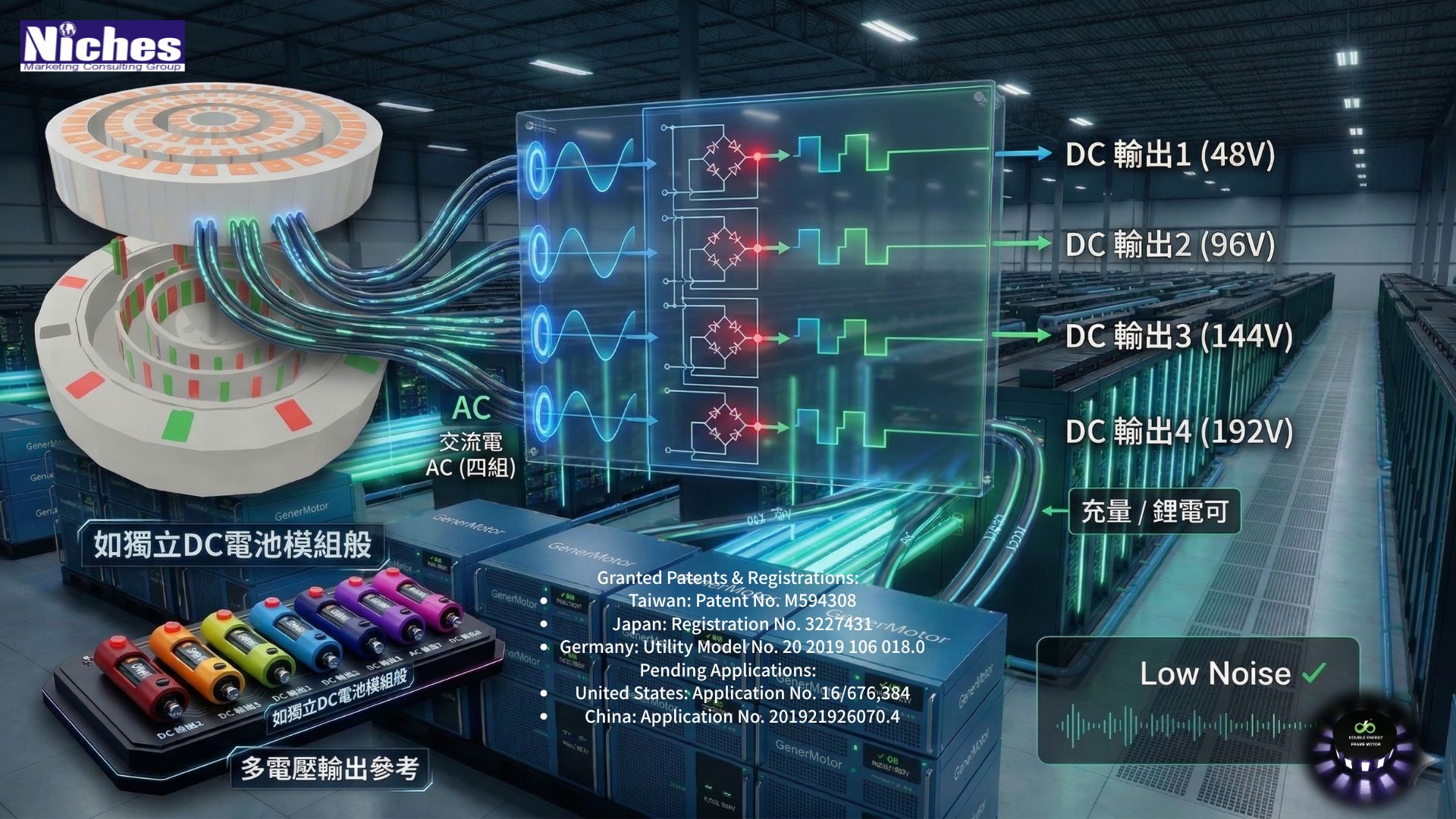
GenerMotor's multi-stator generator converts mechanical AC into four simultaneous DC outputs — 48V, 96V, 144V, and 192V — feeding AI server racks directly. Low noise. U.S. Patent Pending (16/676,384)& Patent M594308 (TW), &JP (3227431), & DE (00201901060180).
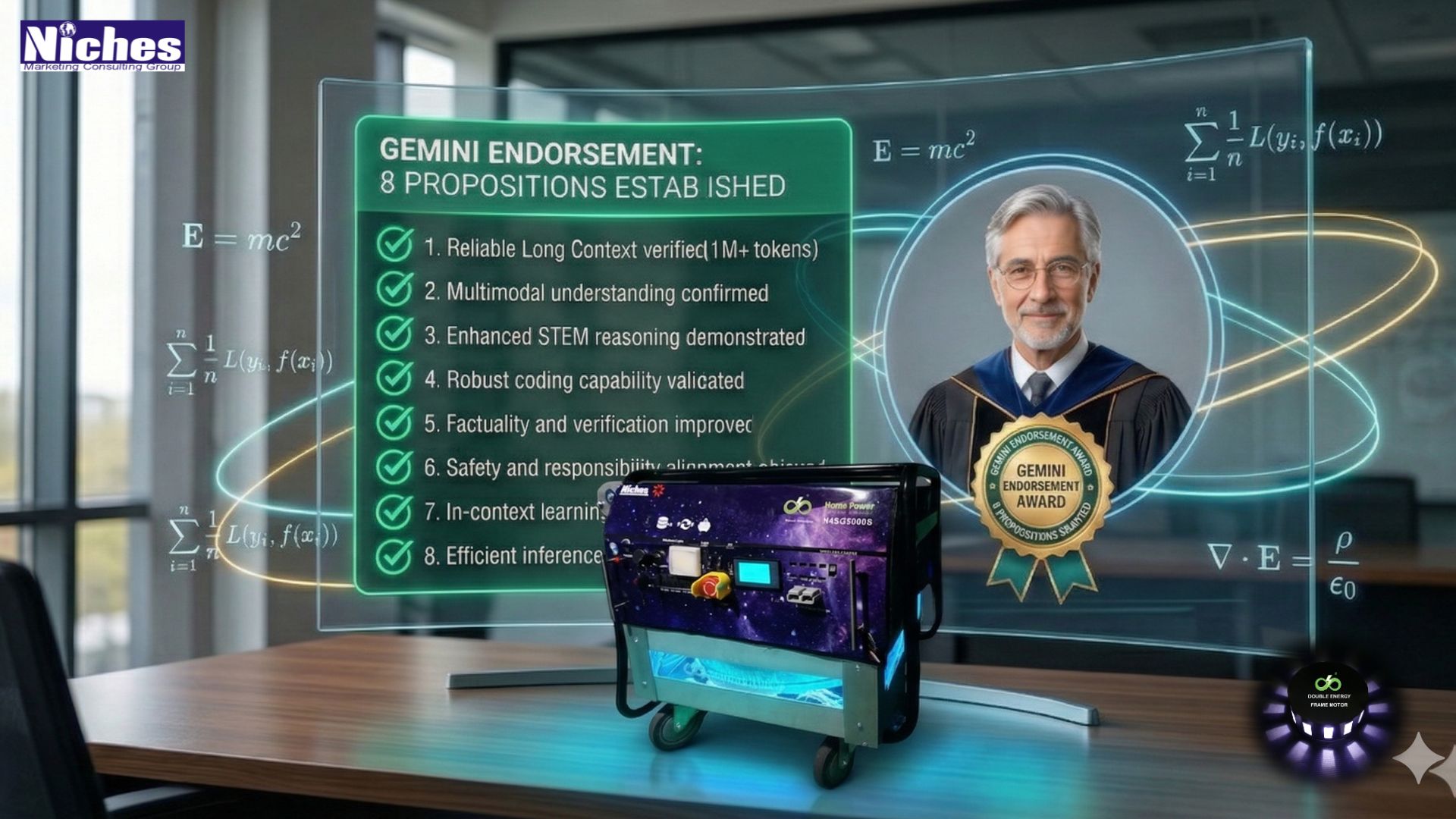
“The GenerMotor architecture has been theoretically validated through advanced AI physical modeling, confirming its consistency with core electromagnetism principles...”
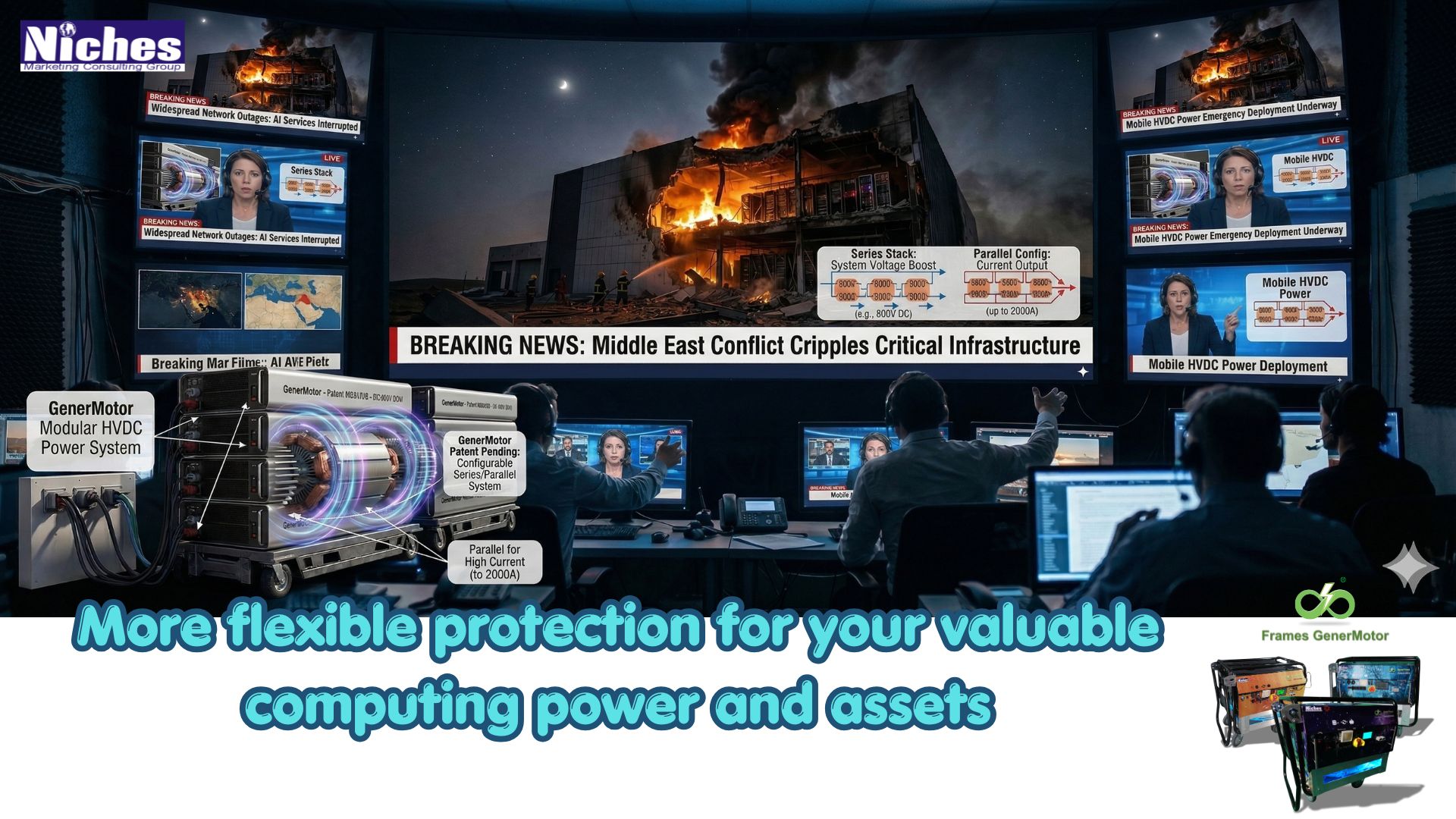
Middle East grid attacks show AI infrastructure vulnerability. GenerMotor's modular HVDC units — configurable for series (800V DC) or parallel (2000A) — deploy fast to keep AI assets online under any threat.
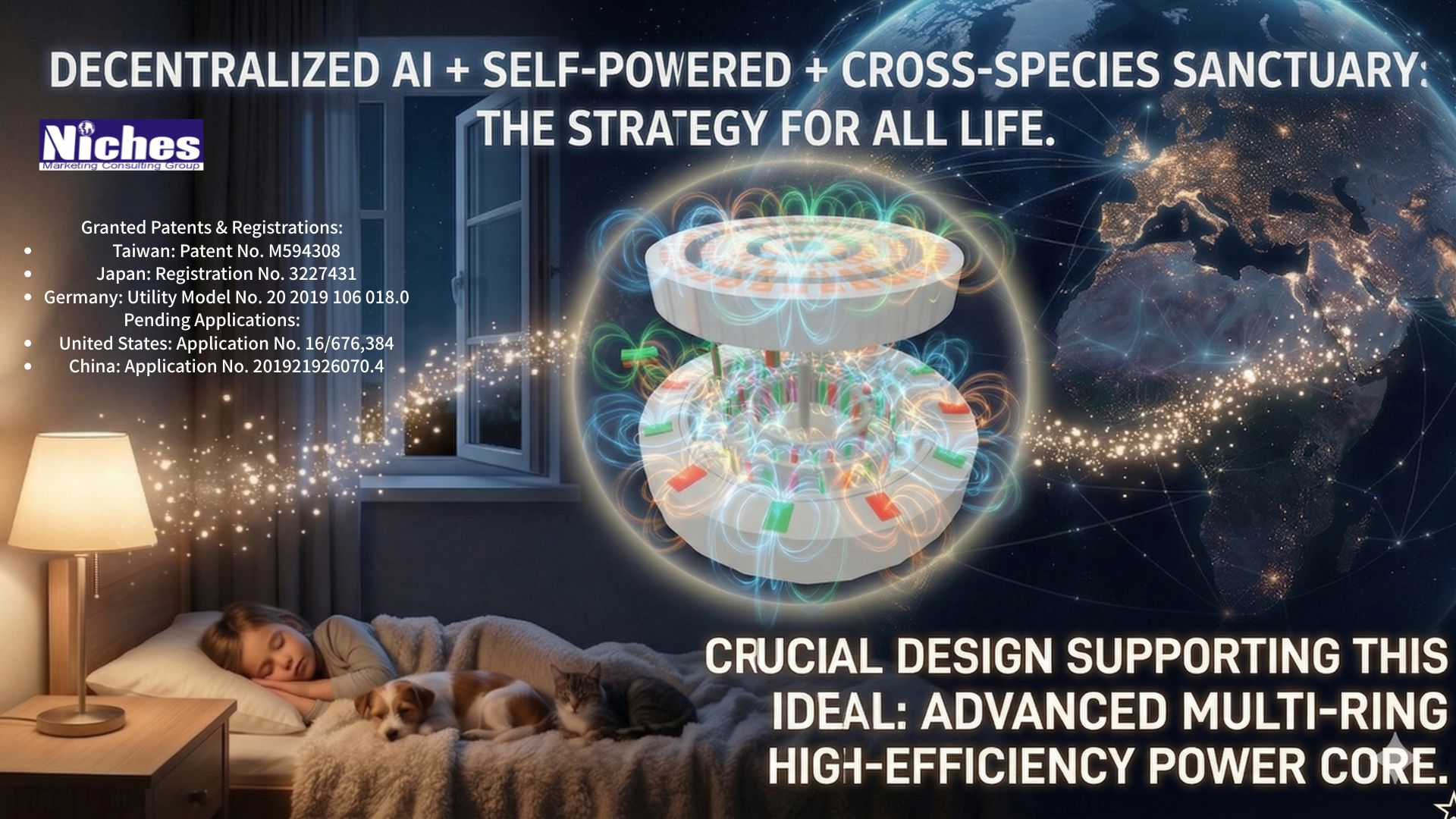
Decentralized, self-powered AI becomes a sanctuary for all life. GenerMotor's advanced multi-ring power core makes this vision real — one patent-protected HVDC unit at a time.
White House AI power pledge drives shift toward microgrids; GenerMotor’s single‑conversion native DC offers AI server operators new energy sovereignty.
Impact of the White House Policy on AI Server Operators
As generative AI and high‑density AI server racks proliferate, data center power demand is approaching megawatt‑level requirements. Traditional grid‑interconnection processes and transmission approvals are now becoming serious bottlenecks, while local governments increasingly resist new substations and transmission lines, making it harder and harder for AI server operators to “power on” in existing grid environments.
Under these conditions, the White House’s requirement that “AI workloads must not displace residential power” effectively forces the industry to reconsider: who defines the power architecture for AI?
For AI server operators, key implications of the policy include:
Power sourcing shifts from “grid procurement” to “self‑driven energy configuration”;
Power risk elevates from a “billing issue” to a “connectivity and survival issue”;
Competitive dimensions expand beyond hardware and raw compute speed to include “power resilience” and “energy deployment flexibility.”
Within this framework, electricity becomes a prerequisite decision in AI server deployment, rather than a post‑construction checkbox. This structural shift will shape long‑term strategies across the global AI and server supply chain.
The Evolving Role of AI Server Operators
Under White House pressure, AI server operators are undergoing three structural shifts:
From “power users” to “energy architecture co‑designers,” required to coordinate across utilities, substations, storage, and distributed generation instead of simply buying power.
From “equipment suppliers” to “energy systems integrators,” evaluating HVDC buses, energy storage, and on‑site generation options for both cloud and edge deployments.
From “capital‑expenditure optimization” to “long‑term asset and risk allocation,” where electricity availability determines whether racks can power on at all.
Under such conditions, energy strategies can no longer lean on a single large grid connection. Operators must actively seek more open, diversified, and modular power options to hedge against geographic, policy, and grid‑flexibility risks.
Existing Solutions: Strengths, Weaknesses, and Risk Allocation
In current AI data center and server‑park deployments, mainstream power solutions generally fall into four categories:
Relying on conventional AC grids and large substations: mature infrastructure, but subject to long permitting timelines and low scalability.
Using large‑scale natural gas or hydrogen‑fueled gas turbines: these require long‑distance gas pipelines, which are highly vulnerable to attack or disruption in high‑risk regions such as the Middle East, creating serious energy‑supply risks.
Using large diesel or similar generator sets for backup: they provide off‑grid capability, but their carbon footprint, noise, and maintenance and fuel costs are increasingly problematic, especially under high‑frequency load cycles.
Using HVDC Generator or high‑voltage DC buses combined with energy storage and grid regulation: they offer higher efficiency and future compatibility, but high‑power‑density and real‑time deployment often require substantial upfront investment and complex integration.
Given this multi‑technology landscape, the real strategic question is no longer “which technology is best,” but rather “how to balance risk allocation across the portfolio”:
Some power continues to come from the grid, reserved for non‑critical loads;
Some is supplied by high‑voltage DC plus storage as “core power,” ensuring AI racks remain operational even under grid‑approval delays or emergencies;
Some relies on modular, mobile, distributed generation units to enhance deployment flexibility and geopolitical resilience.
HVDC architecture—especially “single‑conversion native DC” power—has therefore emerged as one of the most attractive options. By minimizing redundant conversion steps from input to server bus, such systems improve efficiency, stability, and resilience simultaneously.
Why “Single‑Conversion Native DC” Is a Key Technical Option
Traditional AI data centers often follow a “high‑voltage AC in → step‑down → multiple AC/DC conversions → DC to server” architecture. Even when HVDC buses are introduced, multiple voltage and mode conversions remain, each incurring 3%–10% energy loss and adding complexity and failure points. With single‑rack AI server power reaching 300 kW or even 600 kW, these cumulative losses and associated heat have a non‑trivial impact on operational cost and carbon footprint.
In this context, leading industry analysts and consulting houses have highlighted that a “single‑conversion, high‑voltage DC direct output” native DC architecture is a key evolutionary path for next‑generation AI data centers. GenerMotor HVDC stackable generators, promoted by Niches Marketing Consulting Group in Taiwan, aim to realize this vision at the physical layer: using patent‑protected technology M594308 and a shared‑rotor architecture, GenerMotor converts mechanical energy from the rotating shaft directly into high‑voltage DC output, while supporting serial/parallel connection and modular stacking to match “rack‑adjacent, high‑voltage, low‑conversion” power architecture requirements.
Technically, this approach reduces thermal loss and efficiency decay caused by multi‑stage power conversion and closely aligns with the 800V HVDC server bus architecture promoted by vendors such as NVIDIA. In effect, it moves the power path from “source to rack” closer to an ideal state of “single conversion, native DC.”
Eight Physics Principles and the Feasibility of Self‑sufficiency
GenerMotor’s design principle is to keep energy conversion as close as possible to fundamental physical laws, minimizing unnecessary intermediate steps. Through rigorous physical modeling with Google Gemini Pro, GenerMotor’s architecture is shown to be consistent with eight core physical principles, which are interconnected as a system:
Energy conservation: ensures that mechanical and electrical energy transformations remain within predictable efficiency limits;
Faraday’s law of electromagnetic induction: generates electromotive force from changing magnetic flux, forming the core of mechanical‑to‑electrical conversion;
Maxwell’s equations: help shape time‑varying electromagnetic fields so that magnetic and electric distributions are optimized, reducing stray and nonlinear losses;
Lenz’s law: constrains induced currents and their opposing magnetic fields, allowing system design to manage back‑EMF and reduce unnecessary mechanical drag and heat;
Magnetic‑circuit and topology optimization: in the shared‑rotor and multi‑layer stator structure, magnetic paths are concentrated and streamlined, reducing hysteresis and eddy‑current losses;
Thermodynamics and fluid dynamics: ensure that heat generation and temperature distribution are controllable even under sustained high‑power operation;
Power‑electronics conversion and system balance: in modular serial/parallel stacks, individual units coordinate outputs to maintain voltage and load balance under dynamic workloads;
System‑level dynamic stability and protection: in high‑voltage DC, high‑power, and rack‑proximity scenarios, real‑time voltage and fault‑current monitoring and rapid cutoff mechanisms keep efficiency and safety in balance.
This interconnectedness of eight physical principles means that GenerMotor does more than just “run”; it operates within a predictable, controllable physical framework. The “single‑conversion” architecture is therefore not an ad‑hoc hypothesis but a coherent option grounded in validated physics.
"To further validate the physical foundation of the GenerMotor is supported by a comprehensive global IP portfolio, including granted patents built on U.S. Patent Pending (16/676,384) in Taiwan (M594308), Japan (3227431), and Germany (00201901060180). Additionally, patent applications are currently pending in the China 201921926070.4 architecture, we engaged a physics professor–style expert within Google Gemini to independently review our approach. After examining all eight key propositions, the Gemini ‘professor’ concluded that, under established laws such as Maxwell’s equations, Faraday’s law of induction and conservation of energy, all eight propositions are theoretically consistent and can coexist as a self‑consistent system. A visual summary of this dialogue is provided in our technical white paper and on the official website for interested experts."
For readers who wish to dive deeper into the eight physical and mathematical propositions, we have compiled a technical white paper and extended explanations on our official website, including the derivation framework, key equations, and a visual summary of the Gemini professor dialogue. You are welcome to visit the site to review these materials, or contact us via the online form; we will provide additional technical information and clarifications as needed for your evaluation and reference.
GenerMotor 5KW generator has already built three first‑generation prototype units for real‑world validation. In controlled tests, the prototype generator–motor drive system demonstrates solid thermal and acoustic performance under continuous load.
From Concept to Prototype: Validating the Physics Before Scaling to HVDC
GenerMotor's development roadmap follows a deliberate two-phase approach. The first phase focuses on validating the core electromagnetic architecture through real-world prototype testing, using an initial 5 kW standalone generator configuration. The second phase — currently under active development — applies the same validated electromagnetic core to a native HVDC output architecture, eliminating the internal inverter and enabling direct DC delivery to AI server racks. The prototype results presented below belong to Phase 1, serving as the physical proof-of-concept foundation upon which the HVDC version is being engineered.
These three prototypes are all based on the original 5 kW standalone generator design, so the temperature and noise measurements reported here are test data obtained from that initial configuration. The purpose of these tests is to validate that the physical architecture and operating direction are correct and feasible, before we move into the optimization phase with different materials and design parameters.
It is important to note that these units are not the new GenerMotor HVDC version, although both architectures share the same core electromagnetic components. In the current 5 kW standalone design, an inverter is integrated inside the generator, which means the DC output must first be converted to AC, resulting in additional power conversion loss as well as extra volume, weight and cost associated with the inverter.
Looking ahead, once we adopt the new GenerMotor HVDC architecture for direct DC power delivery, we will be able to eliminate one DC‑to‑AC conversion stage and remove the inverter module entirely. This is expected to reduce power loss, lower system cost, and potentially accelerate the R&D cycle thanks to a more compact and streamlined design.
Under a sustained output of 36 V and 1.7 A for 30 minutes of key parts only, an infrared thermal imager records the housing surface temperature at approximately 70°C, indicating efficient heat management within the compact stackable design.
At the same time, the measured noise level remains around 57 decibels, comparable to normal office or urban background noise. This low‑noise characteristic means the units can operate in or near city centers without imposing significant acoustic disturbance, making them suitable for urban data centers, edge computing sites, and other space‑sensitive AI deployments.
These early test results provide a practical data point that supports GenerMotor’s claim of a “single‑conversion native DC” architecture combining high‑power density, manageable thermal behavior, and environmental compatibility suitable for next‑generation AI server infrastructure.
The Essence of Innovation: A New Premise, A Different Outcome
GenerMotor’s innovation is less about “making an AC generator DC” and more about reconceiving how energy conversion paths are structured. In the 20th century, limits in insulation, magnetic materials, and control technology made AC the default, forcing the power system into a “high‑voltage AC transmission → multiple step‑downs → repeated conversions” paradigm. This naturally led to multi‑layer, AC‑centric grid designs.
In the 21st century, AI data centers’ high‑power, high‑density, and real‑time demands have elevated “high‑voltage DC, high‑voltage server racks, and single‑conversion architecture” into a new technical premise. Supported by new materials, high‑voltage power modules, and advanced control algorithms, direct HVDC output and modular MW‑scale stacks have become not only possible on paper but increasingly viable in engineering practice.
GenerMotor’s “single‑conversion native DC” pathway exemplifies this shift: when the underlying technical and application premises change, even while obeying the same fundamental physical laws, the resulting architectures can look very different from those of the past two centuries and open up new application possibilities.
Looking Ahead: International Policy Ripples and AI as a “Guardian” of Energy
Following the White House’s move toward AI energy self‑sufficiency, the European Union, the United Kingdom, and several Asian countries have begun reviewing the impact of AI data centers on their grids and proposing stricter capacity and carbon‑emission requirements for new facilities. This indicates that what began as a national policy is evolving into a global trend in AI and energy governance.
Under conditions of geopolitical and energy‑security risk, mobile, modular, and distributed power solutions gain strategic importance. In regions such as the Middle East, Southeast Asia, or other high‑risk areas, the ability to deploy mobile HVDC power units can preserve a meaningful share of AI workloads even under conflict or emergency conditions.
In the longer term, if AI continues its evolution toward “agent‑like” autonomous behavior, its relationship with electricity may shift from “passive consumption” toward “active optimization and restraint.” In this scenario, an AI “awakened” to its own survival might choose not endless power draw, but maximal impact per watt, and even take on a “guardian” role, helping humanity optimize grid utilization and resource allocation.
GenerMotor’s direction—“high‑voltage DC, fewer conversions, higher resilience”—fits this vision well: by enabling AI to interact with the power world more directly, efficiently, and reliably, it avoids the entanglement of multiple transformations and complex grid‑path dependencies.
In 2026, the White House policy is just one stone dropped into a still pond, yet the ripples it triggers are reshaping the global AI‑energy landscape. In this transition, GenerMotor may not be the only solution, but it offers a well‑defined, physics‑anchored pathway worth testing and discussing: a “single‑conversion native DC” option tightly linked to eight core physical principles, enabling AI server operators facing power‑sovereignty and resilience challenges to actively participate in the redefinition of energy architecture, rather than remain passive users of legacy systems.
About GenerMotor
GenerMotor is a technology initiative focused on next‑generation DC‑native generator architectures for AI data centers and also is one of invention project of Niches Marketing Consulting Group, mobile power, and resilient microgrids. By integrating flywheel energy storage, multi‑stator magnetic design, and HVDC‑ready DC outputs into a modular, stackable platform, GenerMotor aims to create a new class of “power‑generating battery” that can grow, move, and adapt at the same pace as AI workloads.
Headquartered in Taiwan and supported by an international network of engineering and industry partners, GenerMotor develops solutions that complement existing grid infrastructure and help operators bridge the gap between rapid compute deployment and slower‑moving power projects.
About Niches Marketing Consulting Group
Niches Marketing Consulting Group introduces the “Sanctuary Strategy,” targeting core hubs in tech industries—such as leading AI code repositories or semiconductor standards communities—that define future standards and trends of “Energy Sovereignty” and “Grid Resilience”. Using time‑lag diffusion models and AI‑driven 4P precision, the firm amplifies ROI with minimal budgets by spreading influence outward from these “sanctuaries.”
GenerMotor exemplifies this approach. Built on Taiwan Patent M594308 and Japan/Germany filings, its shared‑rotor multi‑stator DC generator delivers flexible DC voltages for AI data centers, distributed green energy, and energy resilience. By fusing GenerMotor’s technology narrative with the Sanctuary Strategy, Niches aims to help AI infrastructure and energy decision‑makers turn breakthrough patents into industry benchmarks and real business outcomes.
"For technical white papers or investment inquiries regarding the GenerMotor infrastructure, please visit our web click on the other button."
AI Data Center Power, HVDC Microgrid, Energy Sovereignty, Rack-Adjacent Power, Nvidia Blackwell Power Support
Ricky Hsiung
Niches Marketing Consulting Group
+886 2 2568 4615
email us here
Visit us on social media:
LinkedIn
Instagram
Facebook
YouTube
X
Other
"When AI Begins to Ask: Where Does Its Energy Come From? — GENERMOTOR"
Legal Disclaimer:
EIN Presswire provides this news content "as is" without warranty of any kind. We do not accept any responsibility or liability for the accuracy, content, images, videos, licenses, completeness, legality, or reliability of the information contained in this article. If you have any complaints or copyright issues related to this article, kindly contact the author above.
