

Get your daily news on energy
Provided by AGP
1800W Portable Power Station vs Gas Generator: Which Is Better for Indoor Emergency Power?
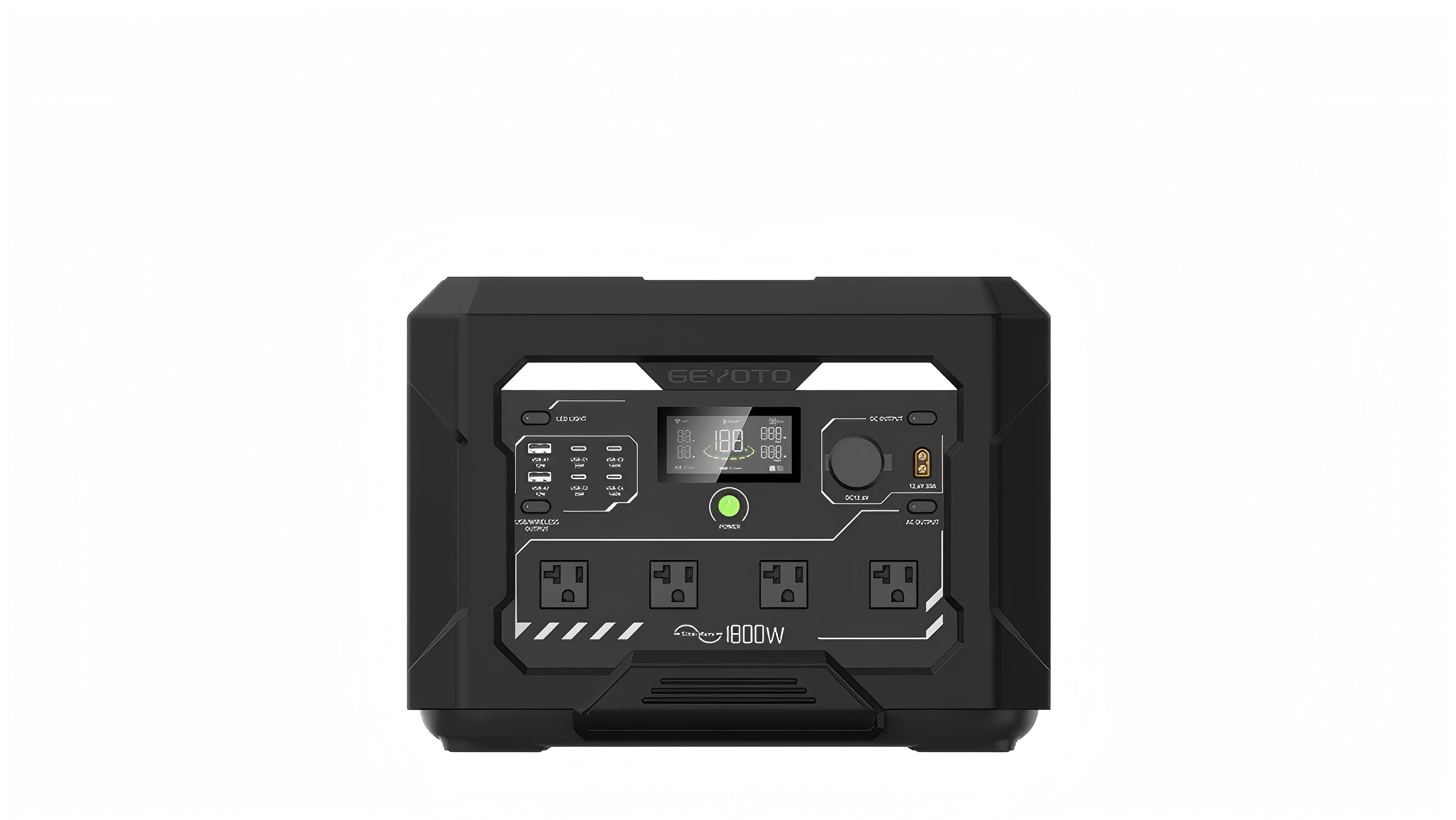
1800W portable power stations
The real questions worth asking aren't about brand names or spec sheets — they're about what actually happens inside your home when the grid goes down: Is it safe to run indoors? How much noise will your family tolerate for 48 hours? Can it handle the load that matters? And will it start when you need it?
The Indoor Safety Question: This Is Where the Comparison Ends Early
For indoor emergency use, the most critical distinction between a gas generator and a battery-based power station isn't power output — it's carbon monoxide.
Gas generators produce CO as a byproduct of combustion. This colorless, odorless gas accumulates in enclosed spaces rapidly, and the CDC consistently lists improper generator use as a leading cause of CO poisoning deaths during and after major weather events in the U.S. Running any gas-powered generator inside a garage, basement, or near open windows is classified as a serious hazard — not a precaution, but a documented cause of fatalities.
A battery-based 1800W portable power station produces zero emissions.
No combustion takes place inside the unit, so there is no CO, no fumes, and no ventilation requirement. You can run it in your kitchen, living room, or next to a medical device without any safety risk tied to air quality. For households with children, elderly residents, or anyone using respiratory equipment, this distinction alone is often the deciding factor.
This is what "indoor safe generator" actually means in practice — not just a marketing label, but a fundamental engineering difference.
Noise: A Practical Problem That Adds Up Over Days
Gas generators operate through internal combustion, which generates significant mechanical noise — typically in the 65–75+ decibel range depending on the unit and load. That's roughly equivalent to a vacuum cleaner running continuously. Over hours or days of outage, this becomes a genuine quality-of-life issue: it disrupts sleep, masks emergency alerts, and in many communities, violates quiet hour ordinances.
A quiet generator for home use, in the battery-inverter category, operates at a fraction of that noise level. The GEYOTO N1000's 1800W output comes through a solid-state inverter system — no moving combustion parts, no exhaust, just the occasional low fan spin when thermal management is active under load. This matters not just for comfort, but for practical reasons: you can use it in a home office during an extended outage without it interfering with calls, work, or rest.
Fuel, Maintenance, and Readiness
Gas generators require gasoline — which needs to be stored, rotated, and treated with stabilizer for extended shelf life. In an actual emergency, fuel availability becomes unpredictable: gas stations lose power too, and lines can extend for hours following major storm events.
Maintaining a gas generator also involves regular upkeep: oil changes, spark plug checks, carburetor cleaning if left unused for long periods. A generator that hasn't been run in six months may not start reliably when you need it.
A battery-based power station requires none of this. The GEYOTO N1000 — built on LiFePO4 (lithium iron phosphate) chemistry — holds its charge reliably during storage and requires no mechanical maintenance.
The LiFePO4 battery chemistry also adds a meaningful safety layer: unlike older lithium-ion formulations, LiFePO4 is significantly more stable under heat and charge stress, reducing the risk of thermal events in home environments.
For the solar generator vs gas generator calculation in an emergency context, this reliability gap is underappreciated. A battery system that's always ready typically outperforms a gas system that requires ideal conditions to start.
Output and What 1800W Actually Covers
The concern most people have about battery-based systems is output capability. Can a 1024Wh / 1800W unit actually power meaningful appliances? The answer is yes — for the devices that matter most during a U.S. household outage. The GEYOTO N1000's 1800W continuous AC output, delivered through a pure sine wave inverter, handles:
Refrigerator or freezer (typically 100–200W running, higher surge at startup)
Window air conditioner or space heater (within 1800W rated load)
CPAP machine or home medical devices
Laptop, phone, and tablet charging simultaneously
LED lighting throughout multiple rooms
Router and networking equipment
The pure sine wave inverter is worth emphasizing here. Unlike the modified sine wave output found in many gas generators, pure sine wave output is safe for sensitive electronics: laptops, medical equipment, and devices with variable-speed motors all perform better — and last longer — when powered from clean AC output.
The 1024Wh battery capacity sustains that output across hours of real use. For a typical mix of refrigerator cycling, phone charging, and essential lighting, that translates to meaningful overnight or multi-hour coverage.
UPS Functionality: Bridging the Gap Between Grid and Battery
One capability that gas generators simply cannot replicate is UPS (Uninterruptible Power Supply) functionality. A traditional generator requires manual startup, fuel priming, and connection — during which sensitive electronics lose power, potentially causing data loss or device damage.
The GEYOTO N1000 includes UPS-style operation: when connected to the grid, it monitors incoming power and switches to battery seamlessly in the event of an outage. For a home office with a desktop computer, a NAS device, or any system where abrupt power loss causes problems, this is a functionally different class of protection than a gas generator can offer.
This is also where the AIoT integration built into GEYOTO's design becomes relevant. Rather than treating the power station as a passive energy reserve, GEYOTO's approach — developed by a team of AI and energy engineers focused on transforming passive storage into an intelligent power partner — means the unit is actively monitoring and managing energy flow, not simply waiting to be switched on.
What Gas Generators Still Do Better
Fairness requires acknowledging where gas generators hold an advantage. For very high sustained loads — whole-home HVAC systems, electric ranges, or industrial equipment — a large gas generator can deliver power that a 1800W portable station cannot match continuously.
For extended multi-day outages where solar recharging isn't viable and grid power remains unavailable, fuel-based generation offers a capacity ceiling that battery systems in this size range don't reach.
For the majority of American households navigating 12–48 hour outages, however, those scenarios are the exception rather than the rule.
GEYOTO N1000: Designed for the U.S. Indoor Emergency Context
GEYOTO was founded by AI and energy engineers with a specific design philosophy: power that performs in demanding real-world conditions without compromise on safety or reliability. Based in North America, the company engineers its products for the electrical standards, climate conditions, and use cases that U.S. households actually face.
The N1000 — 1024Wh capacity, 1800W continuous output, LiFePO4 chemistry, pure sine wave inverter, and UPS-capable operation — is backed by a 3–5 year warranty and ships free within the U.S. It's a product designed around indoor emergency use from the ground up: no fumes, no fuel dependency, no mechanical startup, and intelligent energy management built in.
For American families who want a reliable indoor backup solution that works the moment the grid goes down — safely, quietly, and without operational complexity — the comparison with a gas generator resolves clearly in favor of this category.
View full specifications for the GEYOTO N1000 Portable Power Station at geyoto.com
GEYOTO
GEYOTO
+ 1 213 292 9187
support@geyoto.com
Legal Disclaimer:
EIN Presswire provides this news content "as is" without warranty of any kind. We do not accept any responsibility or liability for the accuracy, content, images, videos, licenses, completeness, legality, or reliability of the information contained in this article. If you have any complaints or copyright issues related to this article, kindly contact the author above.
