

Tuofa Reports Solar Panel Brackets Project Advancing From Prototyping to Batch Production
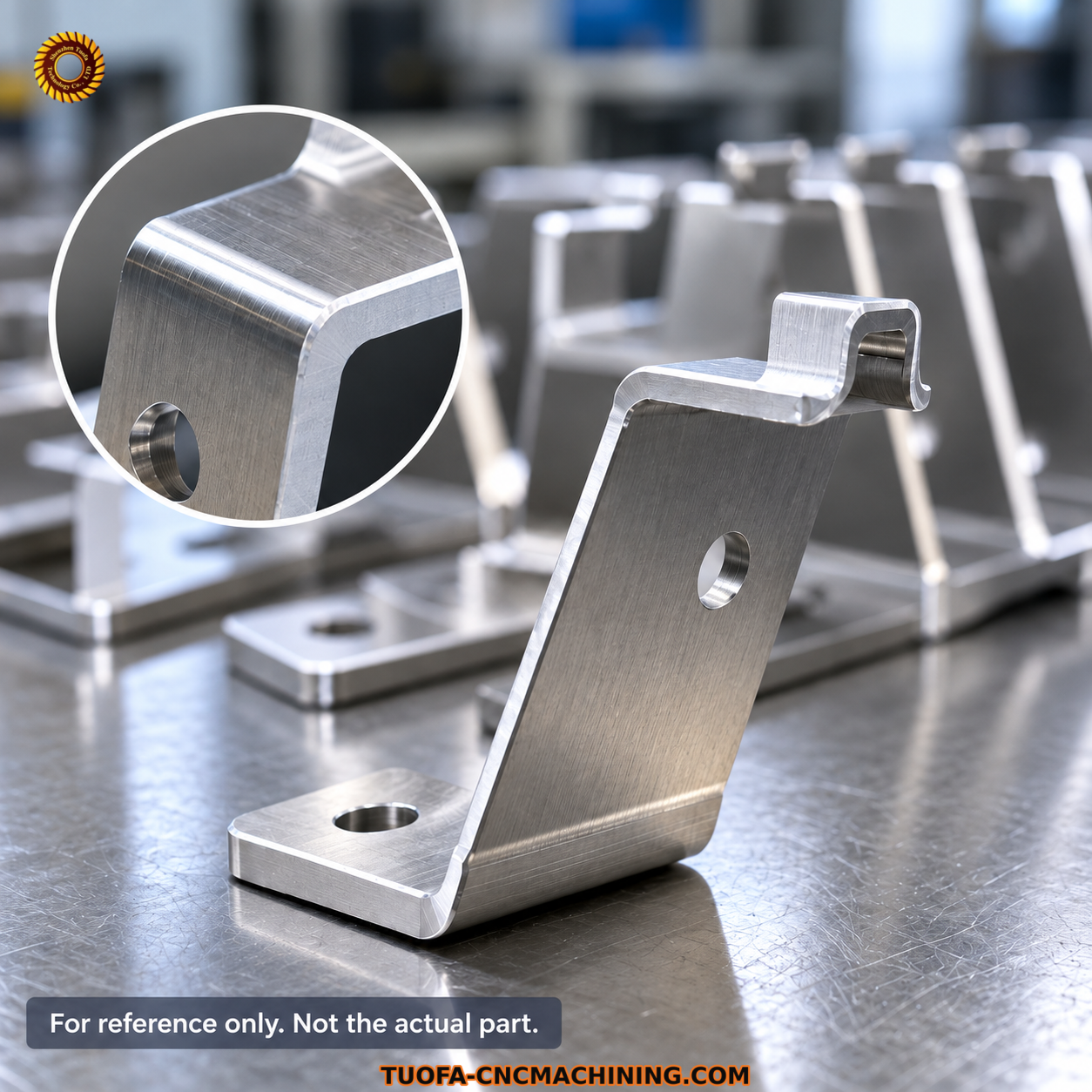
parts from Tuofa
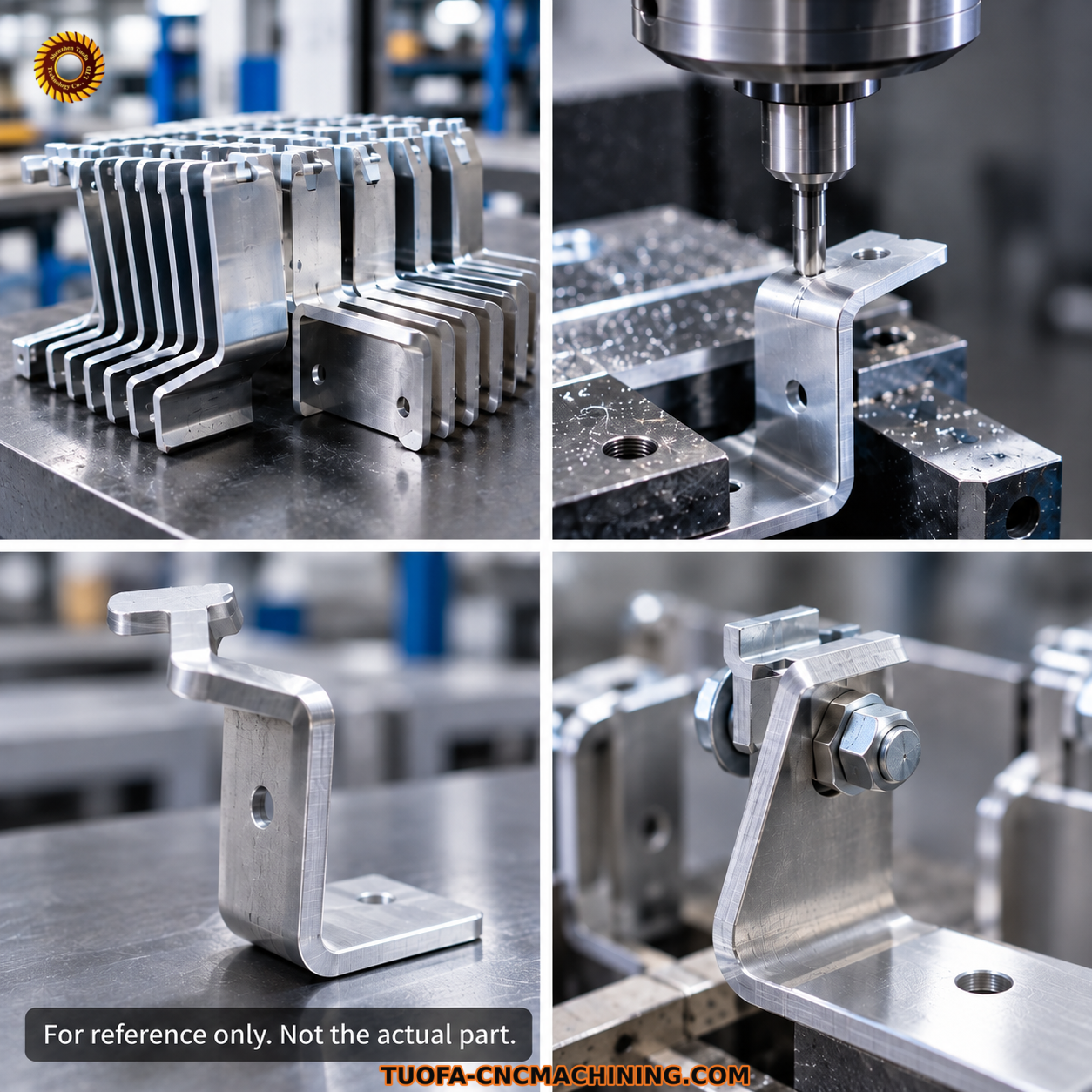
parts from Tuofa 2
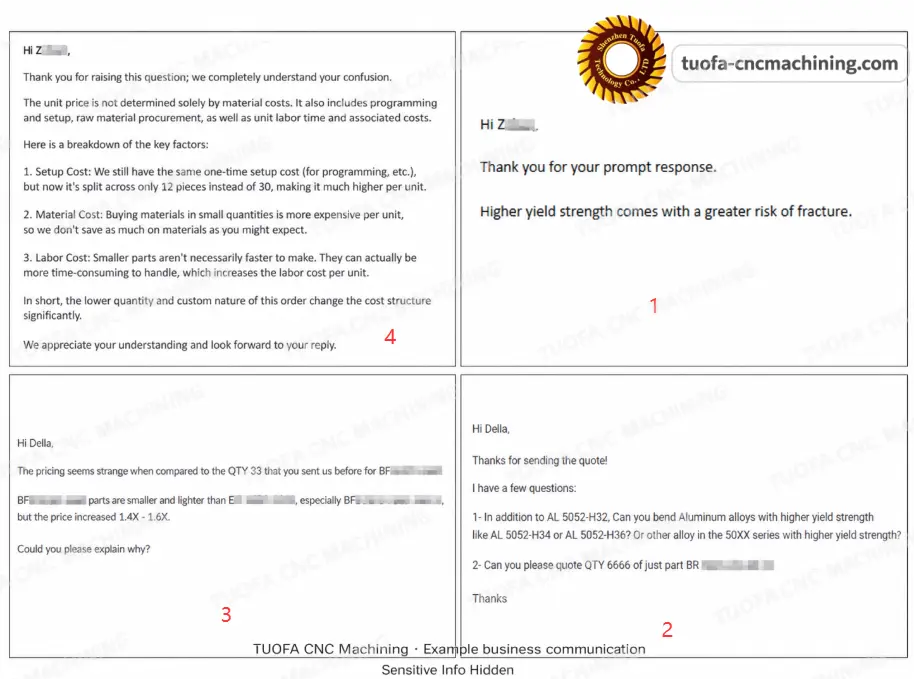
chat details
An OEM project highlights Tuofa's material evaluation, DFM review, small-batch cost management, and multi-part manufacturing coordination.
HOUSTON, TX, UNITED STATES, October 10, 2026 /EINPresswire.com/ -- Tuofa CNC Machining has outlined the engineering and manufacturing decisions behind an OEM project involving custom solar panel brackets that progressed from prototype development to batch production. Rather than focusing on one fabrication method, the case illustrates how material evaluation, design-for-manufacturability (DFM) review, quotation clarification, and coordination of related components can influence an order's progression toward repeat manufacturing.
The components were intended for a solar power support application. The customer and project specifications remain confidential, so Tuofa is sharing the general manufacturing considerations and outcome without identifying the customer or releasing drawings, order quantities, prices, or detailed technical dimensions.
## Material Review Focused on Function, Not Strength Alone
The customer began with a defined aluminum specification and later asked whether a higher-strength alternative would be appropriate. Tuofa's initial question was why additional strength was being considered: did the application require it, or was it a preference that needed further examination?
The distinction shaped the review. Material performance is not determined by nominal strength alone. Depending on the material condition and component geometry, a stronger option can reduce manufacturing flexibility, affect dimensional consistency, or require closer attention to the manufacturing process. These considerations become more significant when a part must fit correctly alongside other components.
The team discussed the relationship between the intended function, manufacturability, and assembly requirements before proceeding. The original material specification was ultimately retained for the sample stage. The project therefore demonstrates a documented engineering decision, not a claim that the company substituted a different alloy or achieved a measurable performance gain.
## Small-Batch Pricing Required More Than a Material Comparison
Another discussion concerned the unit price of a smaller order. The customer questioned why a lower-volume batch of smaller components could carry a higher per-part quotation than an earlier, larger order.
Tuofa explained how programming, process preparation, setup, first-piece verification, material purchasing, handling, and inspection contribute to manufacturing cost. Many of these activities remain necessary even when only a limited number of parts are produced. Small procurement quantities may also create different purchasing conditions from those associated with larger batches.
Consequently, a lighter or smaller component does not automatically result in a lower unit quotation. Costs associated with preparing and checking the work must be spread across fewer pieces. The discussion gave the customer a clearer understanding of the quoted amount, without implying that an actual cost reduction had occurred.
This is one of the recurring commercial considerations in high-mix, low-volume projects, where part designs, quantities, and manufacturing requirements can vary from one order to the next. For OEM purchasing teams, understanding these factors supports more informed comparisons between prototype orders, consolidated batches, and future repeat requirements.
## DFM Review Considered the Complete Assembly
The project involved several related parts intended to work together in a semi-assembled condition. Tuofa reviewed mating dimensions, fastening access, alignment, and the potential effects of dimensional variation before releasing the work to production.
Assessing each component separately would not have captured every issue relevant to final fit. Small variations across connected features can accumulate, affecting how fastening elements engage or whether components align during installation. The review identified features requiring attention during manufacturing and inspection and helped clarify the intended relationships between the parts.
Before production, the review distinguished dimensions affecting assembly from features that could be assessed independently. This helped engineering and inspection teams focus on risks across connected components.
These checks were not presented as an unauthorized redesign of the customer's product. They were part of a practical communication process: identifying questions in the drawings, discussing their possible consequences, and confirming the requirements that production and quality teams would need to follow.
## Coordinating the Transition From Samples to Production
Engineering, production, quality, and customer-facing personnel participated in the preparation process. Their work covered material questions, manufacturing feasibility, assembly-sensitive characteristics, inspection priorities, and scheduling. Customer confirmations were coordinated while production planning continued, reducing the likelihood that unresolved questions would interrupt subsequent stages.
The prototype order was delivered within the customer's requested time frame. After the sample stage, the project moved into batch production, with material and assembly decisions from the earlier work providing a basis for the next phase. Tuofa is not releasing the customer's order volumes or commercial terms.
For engineering and procurement teams, the handoff from sampling to production creates a separate set of questions: which specifications have been confirmed, which features are critical to assembly, and which assumptions from the initial quotation may need to be revisited as quantities change. The case provides an example of addressing these subjects before and during the transition.
The progression is relevant to HMLV manufacturing because a successful sample is only one stage of a longer supply process. Manufacturers must also retain an understanding of approved requirements, prepare for recurring work, and coordinate connected parts when orders continue. These capabilities matter to customers whose production programs include multiple designs and changing quantities rather than a single standardized product.
"For low-volume orders, engineering judgment and communication matter as much as the individual manufacturing operation," said a Tuofa representative. "Our focus is to understand the requirement behind each decision, explain the relevant trade-offs, and carry confirmed requirements forward when customers return for production."
The case did not involve a documented multi-material production program, and no quantified savings or reliability improvements are being claimed. Its significance lies in how the supplier addressed several common HMLV project requirements within one customer program.
## About Tuofa CNC Machining
Founded in 2006, Tuofa CNC Machining manufactures custom metal and engineering-plastic parts for OEM customers. Its services include custom CNC machining, turning, milling, Swiss machining, engineering review, and support for prototypes, small batches, and repeat production. The company also coordinates related part sets and assembly requirements according to project scope.
Tuofa plans to introduce a dedicated website focused on its HMLV manufacturing services.
Expert Team
Tuofa CNC Machining
+86 137 1398 0135
Legal Disclaimer:
EIN Presswire provides this news content "as is" without warranty of any kind. We do not accept any responsibility or liability for the accuracy, content, images, videos, licenses, completeness, legality, or reliability of the information contained in this article. If you have any complaints or copyright issues related to this article, kindly contact the author above.
